
The line between college and professional sports has been blurring for years. The introduction of Name, Image, and Likeness (NIL) deals, the rise of the transfer portal, and the sheer amount of money flowing through the system have all chipped away at the traditional concept of the “student-athlete.” Yet, a new proposal, from two of the most influential figures in the game, has just pushed that line to its breaking point.
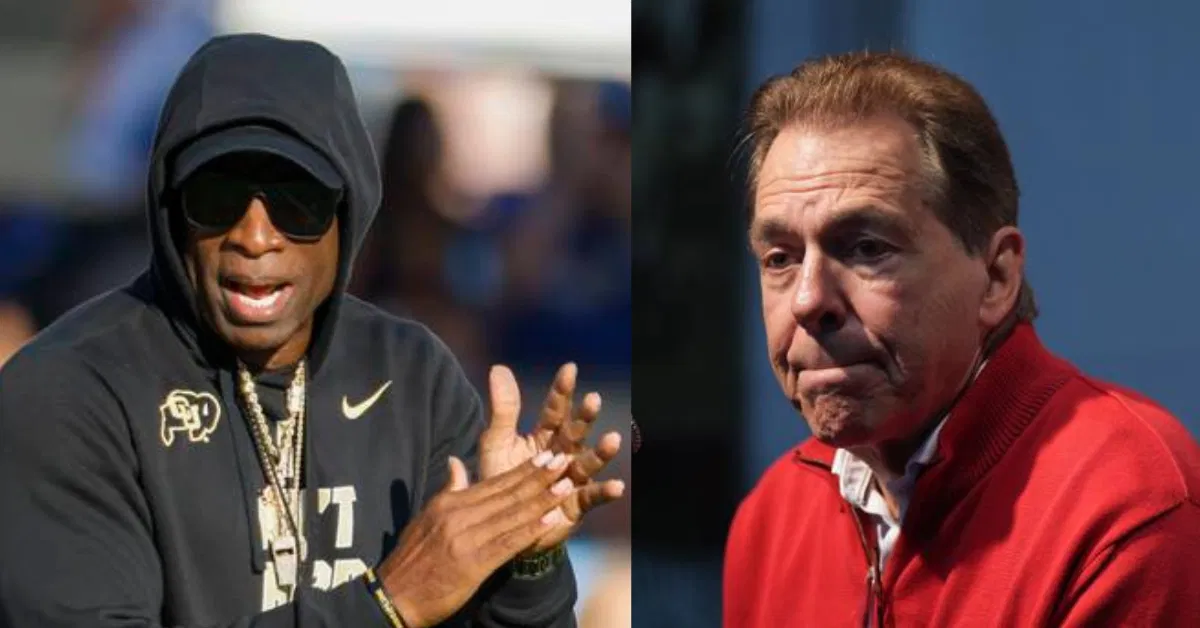
In a move that has sent shockwaves through the NCAA and ignited a firestorm of debate, coaches Deion Sanders and Nick Saban have joined forces to propose a revolutionary idea: pay college football players for participating in the College Football Playoff.
At AthleticDigest.com, we’re not just tracking the headlines; we’re analyzing the implications of a proposal that could fundamentally redefine the most popular sport in America. This is more than a simple pay raise; it’s a direct challenge to the very foundation of college athletics and a powerful acknowledgment that the amateur model is finally, and irrevocably, a thing of the past.
The Proposal: A New Financial Model
The idea, championed by Sanders and supported by Saban, is a simple one in concept: as college football expands its playoff format, so too should the financial rewards for the athletes who generate that revenue. Specifically, the proposal suggests a bonus system tied to the playoff itself, with players on teams that qualify for the tournament receiving a set amount, and those on the championship-winning team getting a substantial final payout.
This isn’t about paying all college athletes a flat salary. It’s a targeted, performance-based model that directly connects a player’s on-field success to a tangible financial reward. It’s an idea that has been discussed in hushed tones for years, but coming from two of the most prominent voices in the sport gives it a weight it has never had before.
- Deion Sanders, The Visionary: Sanders has long been a vocal advocate for players’ rights. His philosophy, “we ball for the bag,” is a clear signal that he views college football through a pragmatic, professional lens. His ability to connect with players and his willingness to challenge the status quo make him the perfect messenger for this revolutionary change.
- Nick Saban, The Traditionalist (Turned Pragmatist): Saban’s support is what makes this proposal truly significant. For decades, he was the face of the traditional college football system, a coach who built a dynasty on discipline, tradition, and a ruthless focus on the team above the individual. His endorsement of this new financial model is a powerful admission that the old ways are no longer sustainable. It’s a clear signal that the tectonic plates of college football have shifted for good.
The Argument: Why Now?
The timing of this proposal is no coincidence. It comes as the College Football Playoff is expanding to a 12-team format, a move that will generate billions in new media rights revenue. The new Big Ten and SEC television deals are a testament to the immense value of college football. With coaches, athletic directors, and conferences all getting a bigger piece of the pie, the question of whether the players deserve a direct share has become impossible to ignore.
The argument for paying players is built on several key pillars:
- Fairness and Revenue Sharing: The players are the product. They are the ones putting their bodies on the line, practicing for hours, and generating the excitement that fuels the entire enterprise. To deny them a direct share of the revenue they create is, in the eyes of many, an ethical violation.
- Addressing the NIL Wild West: While NIL was meant to help players, it has created a chaotic and unregulated marketplace. The current system often benefits a small number of superstar players and, in some cases, serves as a thinly veiled recruiting tool. A structured, league-wide compensation model would provide a more equitable distribution of wealth.
- The Professionalization of the Game: Let’s be honest: college football is already a professional sport in everything but name. The demands on top players—the time commitments, the national travel, the media obligations—are on par with a professional career. Paying them for their most significant contributions would simply be aligning the financial model with the operational reality.
The Resistance: Obstacles and Concerns
Of course, this is not a simple fix. The proposal faces significant hurdles, and the resistance will be fierce.
- The NCAA: The NCAA has long fought against any form of direct player payment, arguing that it would jeopardize the amateur status of the student-athlete and undermine the educational mission of the universities. While the courts have consistently ruled against the NCAA on this matter, a direct payment system would require a complete overhaul of its rules and regulations.
- The “Other Sports” Argument: Critics will argue that paying football and men’s basketball players would create an unfair dynamic, marginalizing athletes in other, non-revenue sports. The question of how to handle compensation for swimmers, gymnasts, and track and field athletes would be a major logistical and ethical challenge.
- The “Student” in “Student-Athlete”: The most frequent criticism is that this would further diminish the academic side of the equation. As players are given more professional benefits, will they be viewed less and less as students and more as university employees?
The Inevitable Future
Despite the challenges, the conversation has moved past “if” and is now squarely on “how.” The support from Sanders and Saban is a landmark moment, a watershed that signals the old guard is finally giving way to a new reality. The era of the “amateur” is over. The era of the “college professional” has already begun.
The implementation of a playoff-based payment system would be a huge step towards a more transparent, fair, and sustainable model for college football. It would not only reward the players who make the game possible, but it would also provide a clear and equitable structure for the billions of dollars that are already pouring into the sport.
The debate is just getting started, but one thing is clear: the future of college football will be one where the athletes are not just playing for the love of the game, but also for a direct share of its immense financial success. And thanks to two of the sport’s biggest names, that future may be closer than ever.
What are your thoughts on this proposal? Should college football players be paid for making the playoff? Join the conversation in the comments below! ????️